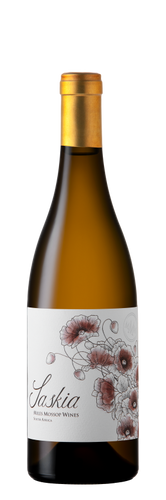



The 2022 wine is a seamless entity with a slightly higher acidity than in 2020 and 2019, but much more layered and the overall polarity in the wine has increased. This one is seriously packed and dense at 13.23% alcohol with an acidity that beams at you. This is arguably the freshest and most linear version ever bottled of Palladius.
The 2020 Palladius displays for the first time in many years a cordial lime, citrus and zesty entry point on the aromas that follow through and then develop into mineral/salty qualities that spill over into some secondary white stone fruit aromas.
For the first time, these stone fruit aromas made their appearance in the 2019 bottling. The wine has a firmly textured structure, the tannin is exceptionally compact, and the volume seems to be suspended in its weight. The color of this 2020 Palladius is maybe the most striking in that it is perhaps the brightest and freshest it has been in years, especially for a wine that has been in a 24-month aging cycle in concrete, amphora and cask. As always, it is suggested to age this wine for a minimum of 4-6 years.
The 2020 Palladius displays for the first time in many years a cordial lime, citrus and zesty entry point on the aromas that follow through and then develop into mineral/salty qualities that spill over into some secondary white stone fruit aromas.
For the first time, these stone fruit aromas made their appearance in the 2019 bottling. The wine has a firmly textured structure, the tannin is exceptionally compact, and the volume seems to be suspended in its weight. The color of this 2020 Palladius is maybe the most striking in that it is perhaps the brightest and freshest it has been in years, especially for a wine that has been in a 24-month aging cycle in concrete, amphora and cask. As always, it is suggested to age this wine for a minimum of 4-6 years.
Over the past 5 years Palladius has been the wine that has grown most in quality and refinement and much of this has to do with the addition of more vineyards and the improvement of their viticulture. Of all our wines the Palladius, with 17 vineyards, currently represents the biggest canvas of the Swartland.
The grapes are picked across a great many vineyards and taken into our cold-room on arrival at the cellar. The next day the grapes are sorted and the whole bunches go into the press. The pressing lasts 2 - 3 hours and in that period a margin of settling of the juice takes place in the collecting tank. The turbid juice is then transferred to concrete eggs of 725 litres and 400 – 1200 litre clay amphoras for the next stage of natural fermentation.
The Palladius matures in these vessels for 12 months and is then racked off into big old foudres for an additional 12 months ageing prior to bottling. After two years the wine is bottled unfined and unfiltered.
The grapes are picked across a great many vineyards and taken into our cold-room on arrival at the cellar. The next day the grapes are sorted and the whole bunches go into the press. The pressing lasts 2 - 3 hours and in that period a margin of settling of the juice takes place in the collecting tank. The turbid juice is then transferred to concrete eggs of 725 litres and 400 – 1200 litre clay amphoras for the next stage of natural fermentation.
The Palladius matures in these vessels for 12 months and is then racked off into big old foudres for an additional 12 months ageing prior to bottling. After two years the wine is bottled unfined and unfiltered.
Eben Sadie is considered one of the great preservationists and visionaries in the new generation of South African winemakers. To Eben, the vineyard and fruit are part of the story—the truest expression of his art and philosophy.
The wine writer Neal Martin recently called Sadie an “outspoken, peripatetic, terroir-obsessed winemaker who has been instrumental in putting Swartland on the map. He produces a small portfolio of comparatively expensive, but highly coveted wines based on Rhone varieties sourced from his seemingly never-ending search for pockets of old bush vines and unique terroirs. These are cerebral wines built to age.”Sadie was founded in 1999, first wine was released in 2000.
The wine writer Neal Martin recently called Sadie an “outspoken, peripatetic, terroir-obsessed winemaker who has been instrumental in putting Swartland on the map. He produces a small portfolio of comparatively expensive, but highly coveted wines based on Rhone varieties sourced from his seemingly never-ending search for pockets of old bush vines and unique terroirs. These are cerebral wines built to age.”Sadie was founded in 1999, first wine was released in 2000.